Saturday, December 13, 2014

Meaningful Motivation

                                                        Image Source: www.deliveringhappiness.com

Motivating students...it's a discussion taking place in the teacher's lounge every day.  How do we find ways to motivate students to complete assignments, participate in class, and want to learn in our classrooms?

I definitely do not have all the answers when it comes to motivating students but I do know that a "one size fits all approach" will not work.  We cannot continue to try to motivate all of our students in the same way and expect the desired results.  

As I was reflecting on motivation before writing this post, I thought about what motivates me. Affirmation is very motivational for me.  In other words, a "great job" from my principal, pat on the back from a colleague, or encouraging words from my PLN are the things that keep me going. However, negative words or attitudes do not motivate at all.  In fact, if I feel like I have let someone down, done something wrong, or failed in a way that was disappointing to someone, I tend to shut down.  While there are exceptions, I would say that the majority of the time, negativity does not result in motivation for me.  

I can't help but wonder if this is the case for many of our students.  As teachers, we often try to motivate students by dishing out negative consequences.  We hope that by giving the students such consequences, they will learn from that experience and change their behavior.  However, I can't help but notice that it's the same students that are missing recess, receiving zeros, and visiting the office each day.  Can't we assume that if the behavior isn't changing, it's not working?  

                                                         Image Source: www.buzzfeed.com

Students are different.  They are not going to be motivated in the same way and some students may require more motivation than others.  While intrinsic motivation is the goal, it's unrealistic to expect all students to be intrinsically motivated 100% of the time.  As teachers, it's our job to not only ask questions and guide student learning, but we should also consider the motivational strategies in our classrooms.  

When we get to know our students, their interests, and their dreams, we are better able to motivate them to do what they need to do reach their goals.  If they realize that we genuinely care about them and their story, they begin to trust us.  They begin to realize that we are all working together to reach one goal...success.  

That success might be different for each student.  While success for one student might be making a high score on the next test, success for another might simply be completing an assignment and getting it turned in.  Again, a one size fits all approach will not work with today's students.  They come from such a variety of backgrounds, homes, and families, it is imperative that we make it a priority to know them well enough to find what motivates them.  

I write this post simply to encourage us all, as teachers, to consider or reconsider the motivation strategies that we are using in our classrooms.  If our ultimate goal is to engage and motivate our students, shouldn't the motivation be meaningful?  Shouldn't motivation encourage students rather than discourage them?  Taking the time to know and understand our students gives us the opportunity to find what intrinsically motivates them.  In doing so, students gain an understanding of themselves and are able to understand what does and does not work for them.  


Friday, December 12, 2014

Smore - Interactive Flyers for the Classroom

We used Smore this week in my 5th grade GT classroom as a way to share about the structures that we are studying.  Each student chose a structure that they wanted to learn more about and then researched that structure to find information that they wanted to share.

In planning this project, I was looking for a digital tool that would allow students to share their information in poster form.  However, we didn't want to create regular posters because we wanted them to be interactive.  And then I remembered Smore.  It had been a while since I had used this tool in my classroom, but I remembered enough to know that it would be perfect for this assignment.

After each student had completed their research, I explained what I wanted them to include in their flyer.  We talked about the why we were using Smore instead of creating regular posters.  Here are three reasons that using Smore is appropriate for today's classrooms:

1.  Smore flyers are interactive. - Students can add so much information and content to a Smore versus a paper poster.  They are able to add YouTube videos, audio, website links, and more.  In doing so, they are able give their audience an opportunity to learn even more about the information that they are sharing.  

2.  Smore flyers can be shared with the world. - Smore flyers are able to be easily shared on a blog, website, or social media.  Students can share what they have learned with their parents, peers, and anyone else for that matter. 

3.  Smore flyers teach digital design. - Using Smore, students are able to create visually appealing flyers from scratch.  They can change the fonts, backgrounds, and layout of the flyer in any way that they would like.  This gives students an opportunity to explore digital design and learn how to create using digital tools.  

My students absolutely loved this assignment and worked very hard to create flyers that would teach others about the structures that they had chosen.  Here is an example of one of the student's flyers about The Gherkin.  I love that he was able to share so much information instantly with his audience. I especially like that he was able to add his voice to the flyer to make his learning more personal and meaningful.


I was so impressed with their final products.  They created beautiful flyers that represented the structures that they were studying.

Next time you ask your students to create posters in your classroom, consider using Smore. A free account allows you to create up to 5 flyers.   Educators can purchase Smore annually for $59.00. With this purchase, you are given the opportunity to create an unlimited amount of flyers, receive reports for your newsletters, and gain access to education-themed backgrounds. You can read more about Smore Flyers for Teachers HERE.

I am so glad that we used this tool and look forward to using it more in the future.


Friday, December 5, 2014

TAGT 2014 Reflections

I just got back from TAGT (Texas Association for Gifted and Talented) Conference in Fort Worth.  I attend/present at this conference every year and I always learn so much.  This year was a little different as I went with the intention of networking and really getting as much as I could out the two days that I was there.  

Wednesday night was the Welcome Reception and I had the pleasure of meeting one of my Twitter buddies, Ginger Lewman (@gingerlewman).  It's always such a surreal experience to meet these people that you've followed and learned from online face to face.  We took a quick selfie, chatted a bit, and then I headed out to get some rest for a full day on Thursday.


The next morning started with a wonderful keynote from Nikhil Goyal (@nikhilgoya_l).  His keynote addressed today's school system and the fact that it has not changed much over time.  He pointed out that we subject kids to conditions in school every day that we would not tolerate as adults.  He encouraged teachers to offer choice and real experiences in their classrooms.  Nikhil suggested that we need to think differently about intelligence as a society.  Students should be encouraged to be curious and creative.  He shared this image during his presentation and asked if this is how we are making our students feel every day when they are at school.


After this session, I attended Ginger Lewman's session on gamification and badges.  I had some great discussions with some of the other educators sitting close by as we shared our questions and thoughts about motivating students in our classrooms.  Having an opportunity to discuss my struggles/concerns with my peers gave me an opportunity to hear different perspectives.  I left that session with a lot going on in my head and questions about how I could give badges more significance in my own classroom.

And then it was my turn.  I shared the technology that I use in my classroom and encouraged teachers to engage students in meaningful learning.  After the session, I was able to talk with several educators that are so ready for change.  They want to try things in their classrooms but just do not know where to start.  Some explained that their district just isn't ready for change and they are doing the best that they can.  I was inspired as I listened to their desire to try new things and willingness to implement technology to provide meaningful experiences for their students.  

My colleague, Brenda Davis (@brenkaydavis), shared The Six Thinking Hats strategy in her session.  She challenged educators to use this technique to give students an opportunity to think differently.  In explaining the hats, she gave teachers an opportunity to use the technique themselves.  In doing so, they were able to see the value in looking at a problem from many different perspectives.  Many of them shared how they were using these hats to challenge their students and engage them in different ways.

That evening, we enjoyed laughs and great conversation over dinner with Ginger.  It was so fun to be able to ask questions, share our thoughts, and get to know each other.  She introduced us to Uber (even though I was scared to death) and shared her story with us.  In listening to all Ginger had to share, I was so inspired by her willingness to think differently about education.  I love that she asks the hard questions and encourages other educators to do the same.  By the end of the evening, I knew we had a begun a wonderful friendship and I look forward to many more conversations with Ginger as our paths cross in the future.  

Friday morning, we had the pleasure of listening to another keynote by Scott Barry Kaufman (@sbkaufman) who wrote Ungifted.  He was so much fun and very engaging!  His story is so inspiring and his presentation was enlightening.  In sharing his story, he explained that we sometimes miss seeing the whole child because we get so focused on specific labels.  


He challenged us to help kids fall in love with the future image of themselves.  In closing, he told us about The Future Project which is an organization that provides "dream directors" to help students make their dreams come true.   I was so intrigued by this idea and still can't help but want to find out more about the initiative and the specifics of dream directors.  What a great job description!

As I sit here this evening reflecting on all that I learned and the connections that I made this year at TAGT, I can't help but be thankful for the opportunity to learn from some of the best minds in education and look forward to TAGT 2015 in San Antonio.  
Monday, November 24, 2014

Possibilities = Opportunities


There are some days that it's difficult to believe that things are ever going to change.  I must admit that there are moments that I wonder why I even try.  I wonder if that light at the end of the tunnel is still there.  

But then, I read my Twitter feed, I talk to another passionate educator, I read the blog of some of the people in education that I admire the most.  The moment passes and then I realize...it's not about me. It's not about what I can do to change education because I will never be able to change it alone.  It's about us. It's about what we can do to change the classroom experience for our students and we are doing it.  

I came across this quote recently and realized that I spend most of my time complaining about what is wrong with our education system. I rarely take the time to focus on what is right and what is working. 

                                                  Image Source:  www.quozio.com


While it's easy to focus on what's not working in education today, I wanted to take some time to focus on what is working...  

Genius Hour is giving students an opportunity to explore their passions and learn in new and exciting ways.

Technology is giving students opportunities that they have never had before.

Innovative classrooms are giving students the opportunity to produce, create, and inspire others each and every day.

Student blogs are giving us an opportunity to see our classrooms from our students' point of view.

Mentors are giving students access to the outside world, making it easier for them to explore and learn about their passions and interests.

Digital Citizenship is being taken seriously and in some schools has even become a priority.

Student-centered classrooms are happening...maybe not the norm, but they are happening.

If I look at the big picture, my goal is for today's students is to be given opportunities - opportunities to collaborate, create, inspire, and ultimately, learn.  I'm thankful that I teach at a time that all of these are possible.  More than ever before, students and teachers have access to the world.

                                                 Image Source:  www.sendscraps.org

So let's keep doing what others think is impossible.  Let's focus on the possibilities instead of the problems and turn the world of education upside down!
Saturday, November 22, 2014

Three Ways to Give Your Students a Voice in the Classroom

Gone are the days that teachers stood in front of the room and taught the entire class a lesson while the students sat in their desks and listened quietly...or are they?  Sadly, this is not the case.  Many classrooms still focus on discipline, control, and fact based learning even though our students today are making it abundantly clear that this isn't working.

After becoming a connected educator and realizing that I didn't have to continue to teach at my students but could learn with them, I began to see that they want to learn.  They want to share ideas, thoughts, and even their feelings about what is going on in the classroom.  But they are waiting for the opportunity.  They are waiting for someone...anyone, to ask them for their feedback.

I wanted to take some time to share three easy ways that I give my students voice in my classroom. I am by no means an expert on the topic but I have found that by using these strategies, my classroom has become a place that my students want to be.  They feel welcomed, comfortable, and know that they are valued.

1.  Ask them.
The best way to give students voice in the classroom is to ask questions.  Ask for feedback after your lesson.  Give them an opportunity to share what worked and what didn't work.  This can be done with exit tickets or even a quick survey using Socrative or PollEverywhere.

Rebecca Alber wrote a great post titled 5 Powerful Questions Teachers Can Ask Students in which she shares how to ask simple, but meaningful questions in your classroom.  She also addresses tone and ensuring that students feel like we are asking the question sincerely and not trying to make a statement.

Ask your students how they learn best.  Give them an opportunity to find how they learn best by offering a variety of activities.  Encourage them to pay attention to their engagement level and share why or why not they feel like they've learned during a particular activity or lesson.

Believe it or not, students are willing to assess their own learning.  They know, better than anyone, if a lesson was successful or a complete waste of time.   Sometimes, as teachers, we are afraid to ask for their feedback because we don't like criticism.  However, I would much rather know what works for my students than spend day after day doing things that aren't working.

2.  Listen to them.
If you ask your students for their feedback or ideas but don't listen, then it was all for nothing.  When students share their thoughts, it's so important that we really listen to them and act on what they have shared.

                                      Image Source:  http://quotespaper.com/inspirational-quotes/4945

So often when students are sharing, we are thinking about how we are going to reply.  We focus on what we will say, how we will react, or what we will do.  Instead of focusing on our reply, we should be listening to understand our students...understand how they are feeling, understand what they are sharing, and understand where they are coming from.

You can show students that are you are listening by taking their suggestions seriously.  If students say that a particular concept is not coming across clearly, try something different.  Make an effort to understand their perspective and why they are having difficulty understanding.

3.  Know them.
Knowing your students well is so important if you want to provide a meaningful and engaging learning environment for them.  In order to give them what they need, we must have knowledge of what they enjoy, what they don't enjoy, how they learn, and where they come from.

We can get to know our students in so many ways.  Student-teacher conferences are a great way to get to know your students.  Sitting down and talking with them gives them an opportunity to be themselves.  They are able to be "real" and just talk about what is important to them.

Offering choice and paying attention to student choices is another great way to get to know your students.  Genius Hour in my classroom gives me great insight into my students' passions and perspective.  They are willing to share and have meaningful conversations when we are talking about things that are relevant to them.  Giving them choice gives me an opportunity to know my students' preferences when learning.


                                                     Image Source:  www.venspired.com

Knowing that a student is gifted or a struggling reader is important.  However, knowing what they need in your classroom in order to be successful is more important.  Find out what makes them tick, what inspires them, and what questions they have.

Our students deserve a voice in their learning.  They need to know that they are heard and that we want them to learn in ways that are meaningful for them.  In giving students a voice in the classroom, we give them value.  We give them an opportunity to be responsible and to understand that learning is more than watching someone talk while you pretend to listen.  Real learning is about connecting, engaging, and finding meaning.

Our students know what they need, they know how they learn best.  They are just waiting for an opportunity to speak up and share their voice.  It's time for us, as teachers and the rest of the education community to start listening.
Thursday, October 30, 2014

Reflection: An Essential Piece to the Learning Puzzle

As I write this blog post, I am reflecting on things that work well in my classroom...resources and strategies that give my students the best opportunity to learn in ways that are meaningful and engaging for them. In doing so, I will realize what went well, what didn’t go well, and what I can do to become a better teacher.  

Just as I use reflection to improve, students can and should be encouraged to do the same.  I should expect them to do the same.   Reflection is a very important piece to the learning puzzle and when it is left out, it seems as though something is missing and meaningful connections are not made. Reflection is such an important part of student learning.  I have just begun to explore true reflection in my classroom and my students are learning to look back and make connections each day.  

Reflection gives my students the opportunity to be an active participant in the learning (Why The Brain Benefits from Reflection in Learning, TeachThought).   We often reflect about Genius Hour, Depth and Complexity novel studies, and other classroom activities. In doing so, the learning becomes real and meaningful.  And, honestly, if it’s not real and meaningful for our students, what's the point? Reflection adds meaning which has to be there for true learning to take place.


My students reflect most of the time by blogging.  This is such a wonderful way for students to be able to share their learning and process what they have just taken in.  It serves as an outlet...a place to share their thoughts, feelings, and expertise about what they have learned.  It is in their blogs that I am able to see the learning through their eyes, experience the classroom as they do, and use that information to make my classroom a meaningful experience for each one of them.  


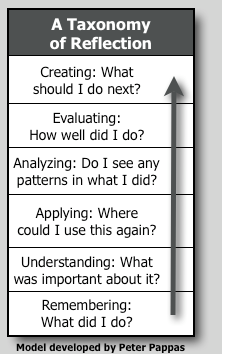
However, I began to notice in reading their blogs that many of them were simply telling me what they did that day in class.  According to Peter Pappas' Taxonomy of Reflection, they were simply remembering. They were not making the connections and understanding the reflection process as well as I had hoped.  They were struggling with truly understanding the benefit of reflection and seeing it as an important piece of the puzzle. I wanted them to use their higher order thinking skills to analyze, evaluate, and create.


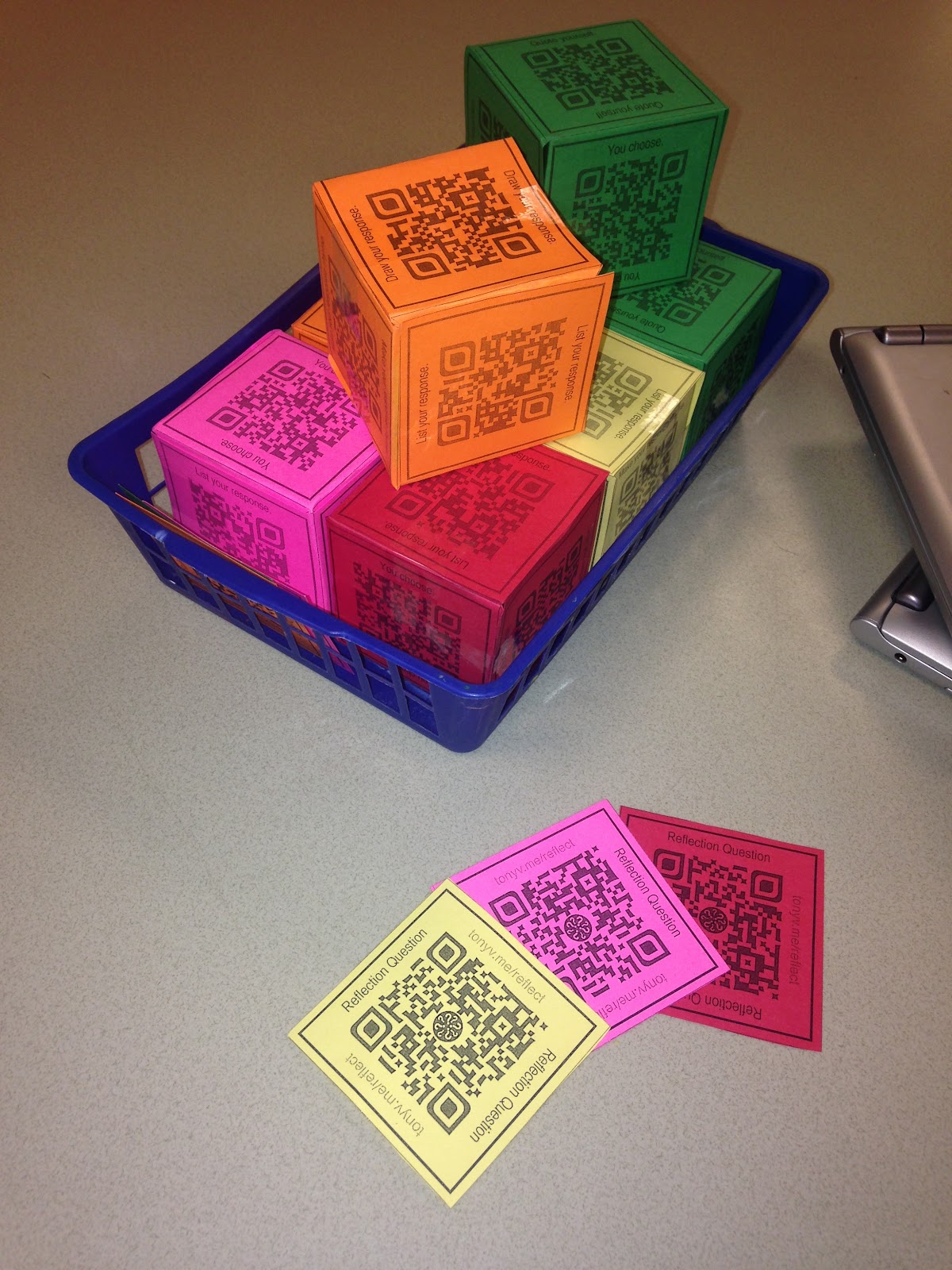
In searching for meaningful ways to teach reflection, I recently came across Roll and Reflect cubes on Tony Vincent’s website, Learning in Hand.   These cubes use QR codes to encourage reflection in many different ways.  Students scan a code for a reflection question.  Some of the questions include, “In what ways have you gotten better?”, “What did you learn that will help you most in the future?”, “One thing I can improve upon is…”, and “What was easy for you?”.  


reflection cubes


After they read their question, students roll the cube to find out how they will respond. They may draw a picture, make a list, create a word cloud, write a quote, or even write their response in words that rhyme.  All of the response options require students to think differently about how they reflect and takes their thinking to a higher level...SCORE!  

I recently printed, created the cubes, and introduced them to the students.  They loved it! It has been a great way to reintroduce them to reflection and encourage them to think about their thinking.  

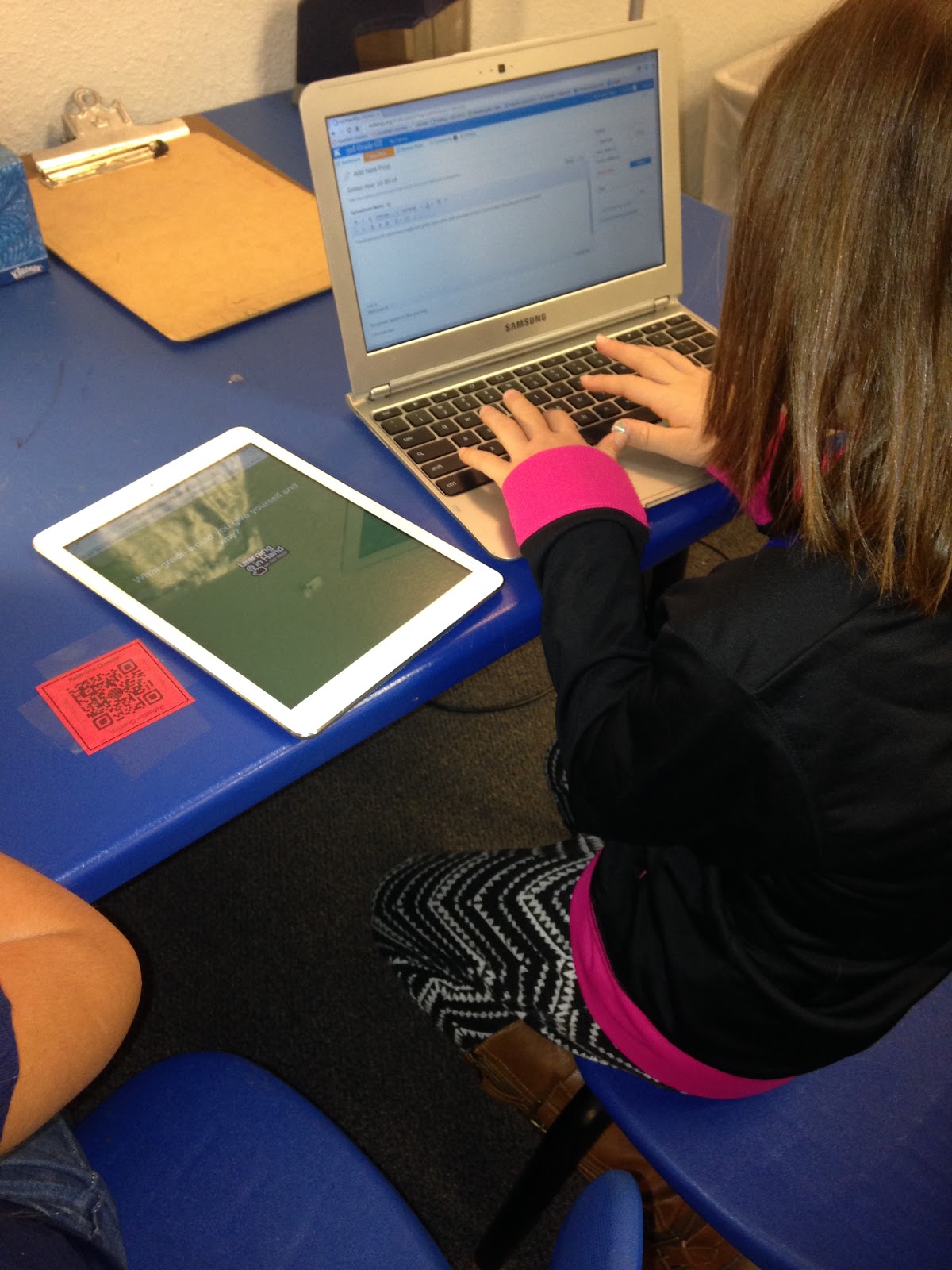
I have decided that I will also ask my students to just scan the Reflection Question card for their question and simply write their response using KidBlog.  I only have one iPad in my room but have several Chromebooks so some students can be blogging while others are responding by rolling the cube.  I actually taped the codes next to the computers at our “blogging station” so that students will have easy access and remember to scan before they write.  

My students are now understanding why we reflect and how it can help their learning “stick”.  It will be very interesting to compare student blog posts at the beginning of the year to the posts as we go through this process of taking our reflections to a higher level.


blogging station


“We do not learn from an experience.  
We learn from reflecting on experience.”  
John Dewey

Below are some amazing articles and resources on reflection that I have used to find ways to make reflection meaningful in my classroom.   Please feel free to comment and share some of the ways you use reflection to create meaningful learning for your students.  


Wednesday, October 1, 2014

Creative Thinkers or High Test Scores: Why Can't We Have Both?

I've noticed that in a lot of the discussions that I have had with teachers, test scores always come up in the conversation.  It usually goes something like this:

"I just can't find time to do all the of the project based learning and fun activities because I am too busy getting them ready for the test in April."

"Genius Hour just won't work in my room because I teach Math/Reading which is tested in the Spring."

"I don't do all of the fun stuff in my classroom because my students need to be ready to test."

Why do so many educators think that we cannot prepare students for tests by using project based learning and innovative teaching?   I don't understand why so many teachers think that it has to be one or the other. Students can be prepared for standardized testing by activities like Genius Hour and projects that make the learning experience more meaningful and frankly, more fun for everyone involved.

In my opinion, application is a huge part of learning.  If students cannot take what they have learned and apply it in a way that is meaningful and relevant to them, then we have missed the mark.  One might even say that we haven't done our job effectively.

For example, knowing math facts is an essential foundation.  However, if students do not know how to apply those math facts in an appropriate situation, what is the point of knowing them?  Students need to know how to comprehend what they have read, but if they are simply comprehending enough to pass a test on the computer, then it is meaningless.

If a student can apply the learning, they will be much more capable of attempting the higher order thinking skills such as analyzing, evaluating, and creating.  On the other hand, if a student has simply seen the skill on a worksheet or on a board at the front of a room, how can we expect them to do any of those things?

Most math worksheets do not show whether a student can apply a skill.  They simply tell us if a student can take what they have learned and do the exact same thing over and over with different numbers.   Reading worksheets simply give students the ability to show that they can comprehend and successfully find the answers in what they read.  They do not tell us anything about the student's ability to connect and find meaning in what they have read.

I'm not saying that there is absolutely no place for worksheets in the classroom.  There may be times that a worksheet is an appropriate way to assess basic skills or simple understanding.  Worksheets might be a way to collect their thoughts or gather information but the learning must be taken a step further.  I often ask students to write their thoughts down before we discuss. But it is very rare that I assign a worksheet with right or wrong answers.

I'm simply saying that I would much rather hear students discussing, collaborating, creating, and really applying what they have learned in a way that is meaningful for them.  Because if this is happening, learning is happening. Students are making connections, understanding, and realizing that learning can be fun and engaging.

I like that one definition of "apply" is to put to practical use.  If students do not connect a way to apply the learning in a practical way, there is really no point to the learning.  It's a waste of their time and we are kidding ourselves if we don't think that they know that.

I've said it many times before but I can cover more standards in one Genius Hour project than I could with an entire stack of worksheets.  Giving students the opportunity to take the skills that they have learned and use them creatively doing something with passion will always be a better idea. Collaborative activities and innovative problem solving will bring excitement and energy into my classroom.  It is for these reasons that I choose to encourage this type of learning.

I write this post just to encourage us all to consider the fact that maybe, just maybe project based learning and innovative teaching might result in higher test scores.  It doesn't have to be one or the other.  That being said, I will always agree that my students come first.  Test scores are not my top priority and never will be.